 BURN STATUS: No Burn Ban In Effect
Protect Your Home & Family from Fire
Welcome to South Kitsap Fire and Rescue’s At-Home Fire Safety resource center. Here you’ll find public safety information related to at-home fire safety. This page includes practical, easy-to-follow guidance to help you protect your home and loved ones from fire and related hazards. From smoke and carbon-monoxide alarm recommendations, home escape planning, and safe cooking practices, to proper use of fire extinguisher and more — we cover the essential steps that make a real difference. We encourage you to read through each section, put the tips and best practices into action, and share them with your household to help keep our community safe, today and every day.
Smoke Alarms: Your First Line of Defense
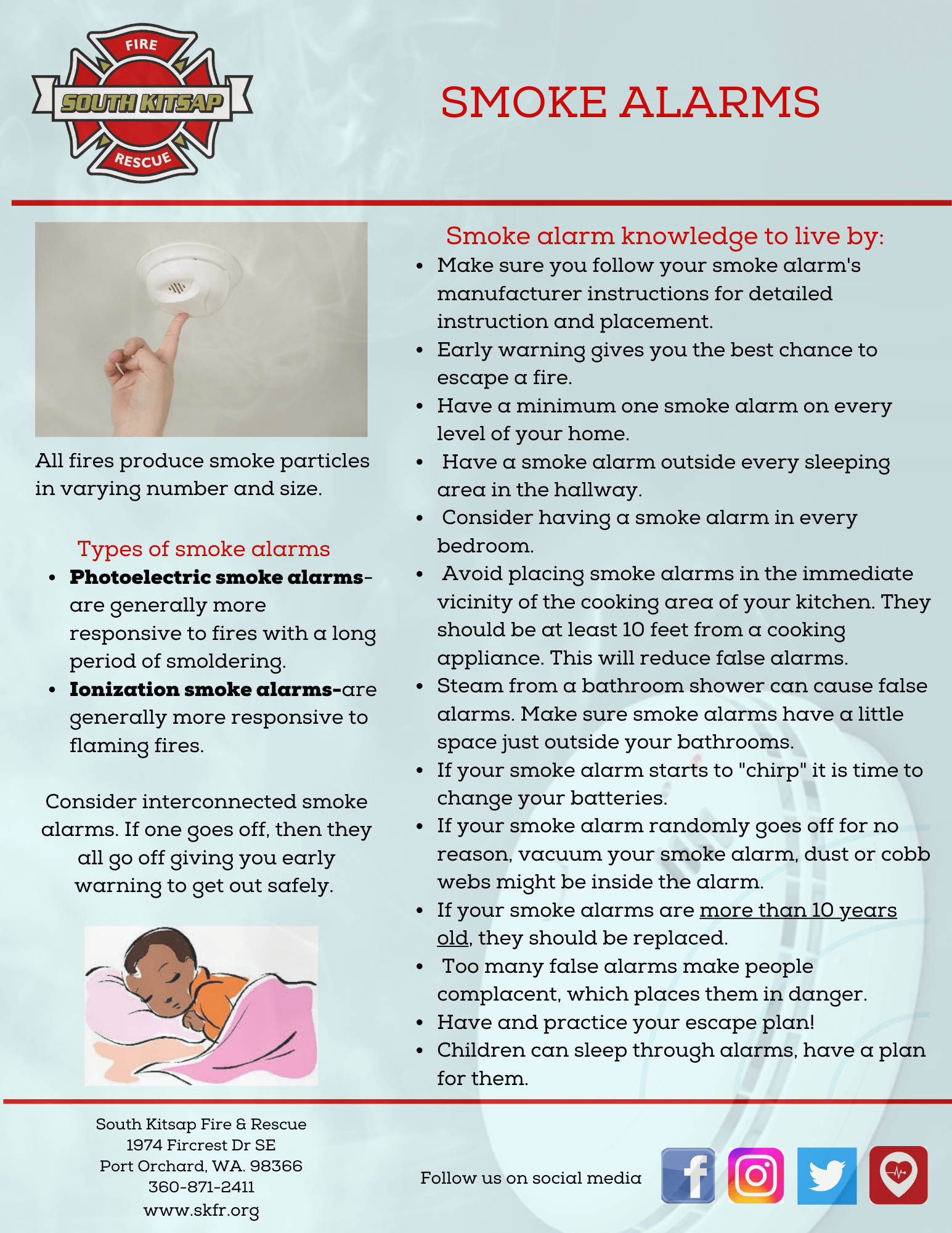
Working smoke alarms save lives — cutting the risk of death in a home fire by half. Smoke alarms should be installed and maintained in every home or space. Fires spread fast, so it’s important to have a plan and working alarms. Note that smoke detectors should also be replaced after 10 years of use to ensure they work properly.
Fire Risks & Prevention Basics
Most home fires are preventable. By understanding the basics on how the spread of fire works, the common risks and taking simple precautions, you can protect your home and family from fire and related hazards.
How Fires Start & Spread
Fire moves fast — it’s a chemical reaction that needs three things to begin: heat, fuel, and oxygen. When these elements come together, energy is released as heat and flames. Modern homes contain many synthetic materials and open designs that can cause fires to grow hotter and spread faster than in the past. Because of this, a small flame can turn into a life‑threatening fire in just minutes.
Chimney & Fireplace Safety
Chimney and fireplace fires are preventable. The Chimney Safety Institute of America reports that creosote buildup in chimneys is the leading cause of chimney fires. Chimneys that are dirty, blocked or are in disrepair can inhibit proper venting of smoke up the flue, creating another risk for fire. Schedule regular inspections and cleanings to reduce your risk and keep your home safe.
Cooking Safety
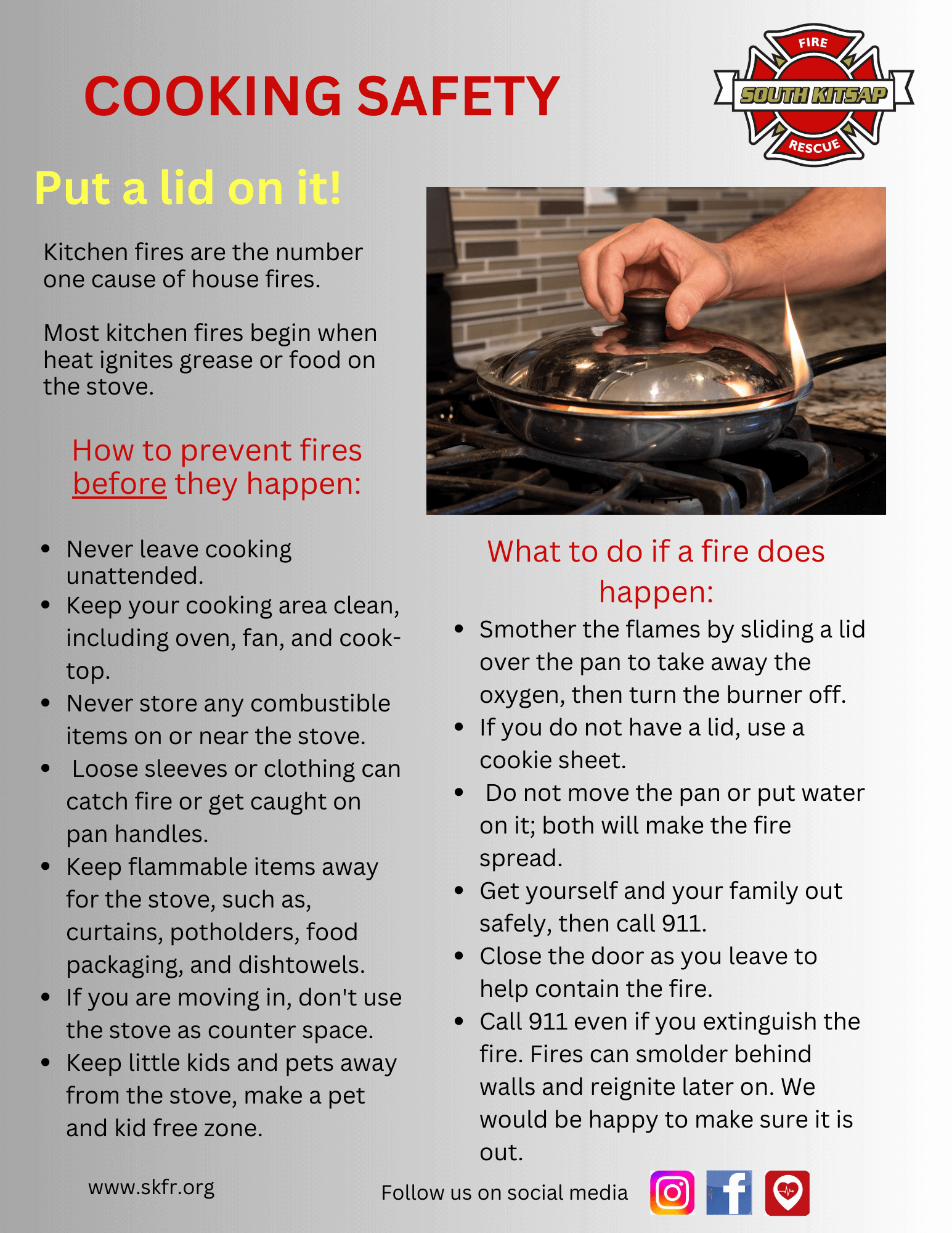
The kitchen is where most home fires begin and is the number one cause of home fires. Never leave cooking unattended, keep lids and oven mitts nearby, and stay alert when frying, broiling, or boiling. Small actions can prevent a disaster before it starts.
Carbon Monoxide Safety
Carbon monoxide (CO) is a silent, colorless, and odorless gas. CO alarms are designed to detect harmful amounts of carbon monoxide in the air. There are several ways in which carbon monoxide can be produced. They come from things such as incomplete burning of fuels, such as wood, gasoline, charcoal, propane, coal, natural gas, oil, and kerosene. Install CO detectors on every level of your home and near sleeping areas. Be sure to always read the manufacturers’ instructions for proper placement of the alarms. Once installed, regularly test detectors and replace batteries as needed to protect your household.
Heating & Electrical Safety
Space heaters, electrical cords, and faulty wiring are also common causes of home fires. Keep flammable and combustible materials away from heat sources, inspect cords and appliances regularly, and never overload outlet.
Create & Practice Your Escape Plan
A well-practiced escape plan can make all the difference in a home fire. In an emergency, every second counts, so it’s important that your household knows exactly what to do.
- Know two ways out of every room in your home.
- Designate a safe meeting place outside, away from your home, where everyone can gather.
- Close your bedroom doors when you sleep. Following the Close Before You Doze® fire education program guidance and research, keeping doors closed at night or in the day can slow the spread of fire and smoke, giving you more time to safely evacuate.
- Review and update your plan whenever circumstances in your home change, such as new furniture, renovations, or additional family members or roommates.
- Practice your plan regularly so that everyone in your household can evacuate quickly and safely.
Having a clear, practiced plan ensures that everyone in your home knows what to do — and can help you stay safe when it matters most. Learn more on why escape plans are important: 5-minute video by the Fire Safety Research Institute on Single-Story Escape Plans.
Fire Safety Tools for Your Home
Fire Extinguishers
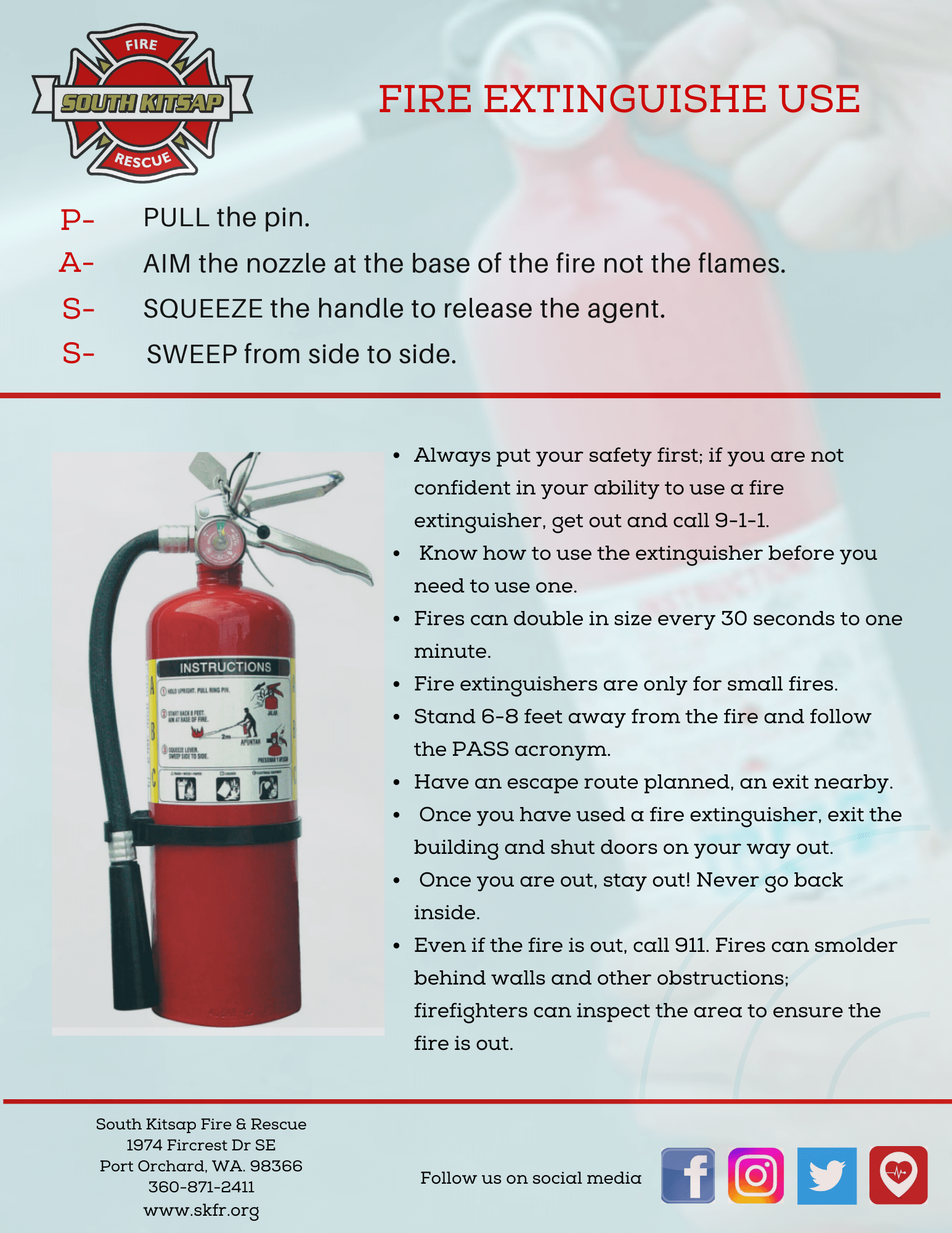
Fire extinguishers are an important tool for stopping small fires before they grow, but they are only effective when used safely and correctly. Keep at least one extinguisher in key areas of your home, such as the kitchen, garage, or near heating equipment. Learn and practice the PASS method — Pull, Aim, Squeeze, Sweep — and always ensure your own safety first. Remember: if a fire is spreading, evacuate immediately and call 9‑1‑1.
Blue Address Signs
Can we find you in an emergency? Blue Address Signs are available and sold by the Kitsap County Department of Community Development (DCD) and can help ambulance crews, firefighters, and law enforcement find your address location. These signs help promote visibility for hard-to-find addresses and locations where house numbers may be difficult to see.
Residential & Commercial Lock Boxes
Lock boxes provide secure access for emergency responders while protecting your home or business building from unnecessary damage. Only the fire department has access to these boxes. Knox Box — a trusted brand used by fire and police departments nationwide — is a popular choice. Click here to view and buy Knox box products available in our local area.
How it Works:
- Order and install your Knox Rapid Access System lock box: https://www.knoxbox.com/
- Call South Kitsap Fire & Rescue, and we will place your emergency key in the box.
- In an emergency, if you are unable to reach your door, we can access your home quickly and safely — without causing damage.
Alternative Option:
You may also purchase a lock box from a local hardware store. Mount it, create your own code, and then call SKFR to provide the code so we can access it during an emergency.
Learn More with Videos & Resources
Fire Science Basics
Fire Extinguishers
Escape Planning
How Modern Fires Behave: Burn Test Demonstration of Natural vs. Synthetic Home Furnishings
Smoke Alarms
Close Before you Doze
Close Before you Doze
Cooking Safety
Informational Flyers
SMOKE ALARM FACT SHEET
More Ways to Protect Your Home
Renters Insurance
Many renters assume their personal belongings are covered by a landlord’s or apartment complex’s insurance policy. Unfortunately, this is rarely the case. A landlord’s insurance typically covers the building, not your personal property.
Renter’s insurance is affordable, often costing on average $15–$30 per month, and helps protect your belongings in the event of a fire, burglary, or water damage from incidents like burst pipes. Some apartment complexes require renters’ insurance to help protect your belongings.
Even if you take every precaution, emergencies can happen including those caused by neighboring units. If you don’t have renter’s insurance, consider exploring coverage options today to help protect what’s yours
Fire Prevention Safety Partners & Organizations
Below is a list of fire prevention safety partners and organizations that offer additional resources on at-home fire safety:
Electrical Safety Foundation International (ESFI) – a non-profit organization dedicated to promoting electrical safety at home and in the workplace.
NFPA (National Fire Protection Association (NFPA) – A global non-profit that develops fire, life-safety, and electrical codes and standards.
U.S. Fire Administration (USFA) – a federal government agency under FEMA (the Federal Emergency Management Agency) dedicated to improving fire prevention, preparedness, and response across the country.