 BURN STATUS: No Burn Ban In Effect
Be Ready Before Wildfire Season
Wildland fire risk is highest when dry vegetation, warm temperatures, and wind combine to create conditions where fires can start and spread quickly. Sources of wildland fires can also include natural causes like lightning, but human activities is the leading cause of wildfire.
Wildfires don’t wait — and neither should your preparation. By taking steps before dry conditions and high fire danger arrive, you can safeguard your home, your loved ones, and your neighborhood. Fires are most likely to start and spread where homes meet natural vegetation, also called the wildland‑urban interface (WUI). Clearing flammable brush, maintaining defensible space, and knowing your evacuation plan can significantly improve safety and give your family the best chance to respond effectively.
Wildland Fire Preparedness Checklist
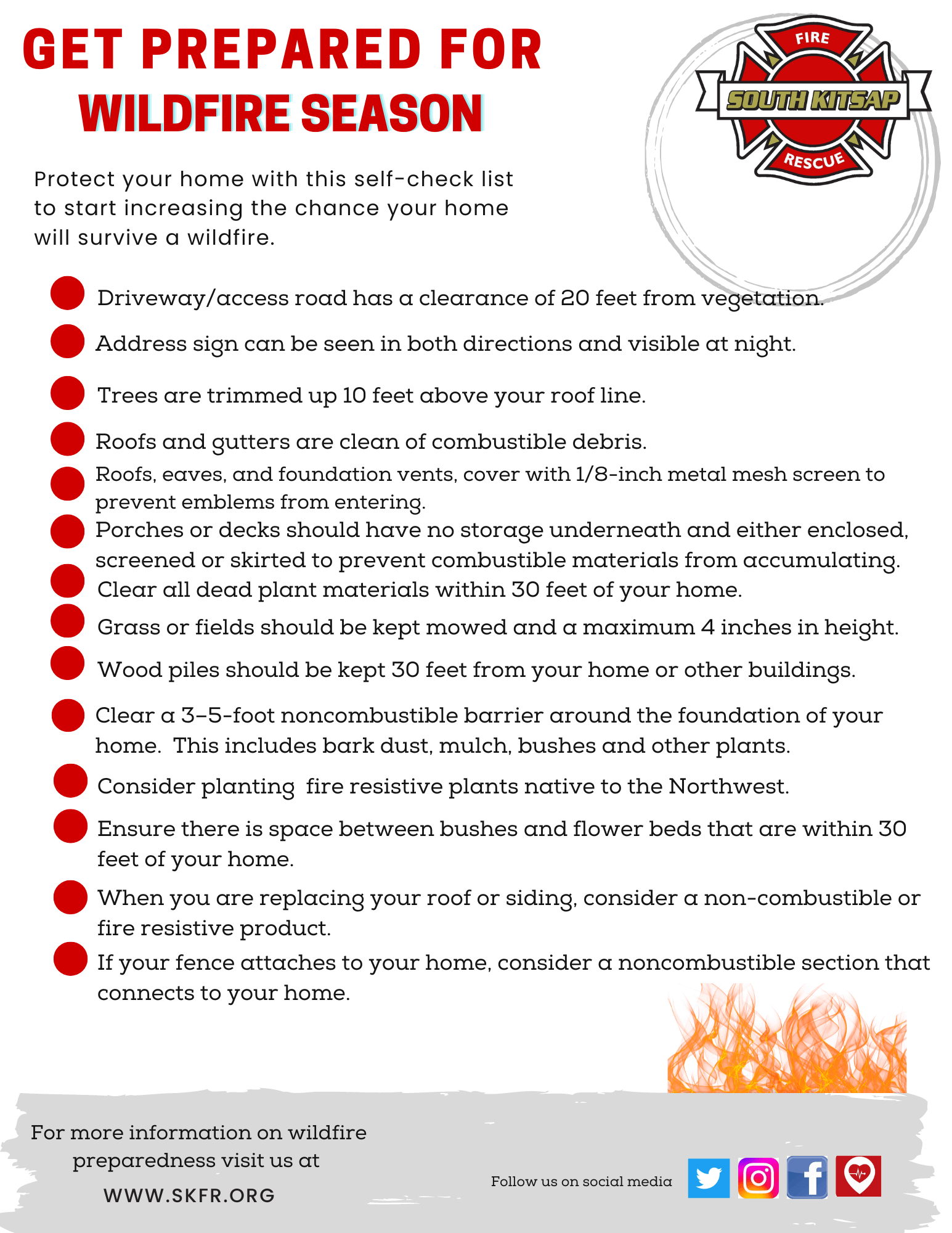
Wildland fire safety starts long before a fire begins. Use this checklist to make your home and property more resilient:
Home Hardening & Defensible Space
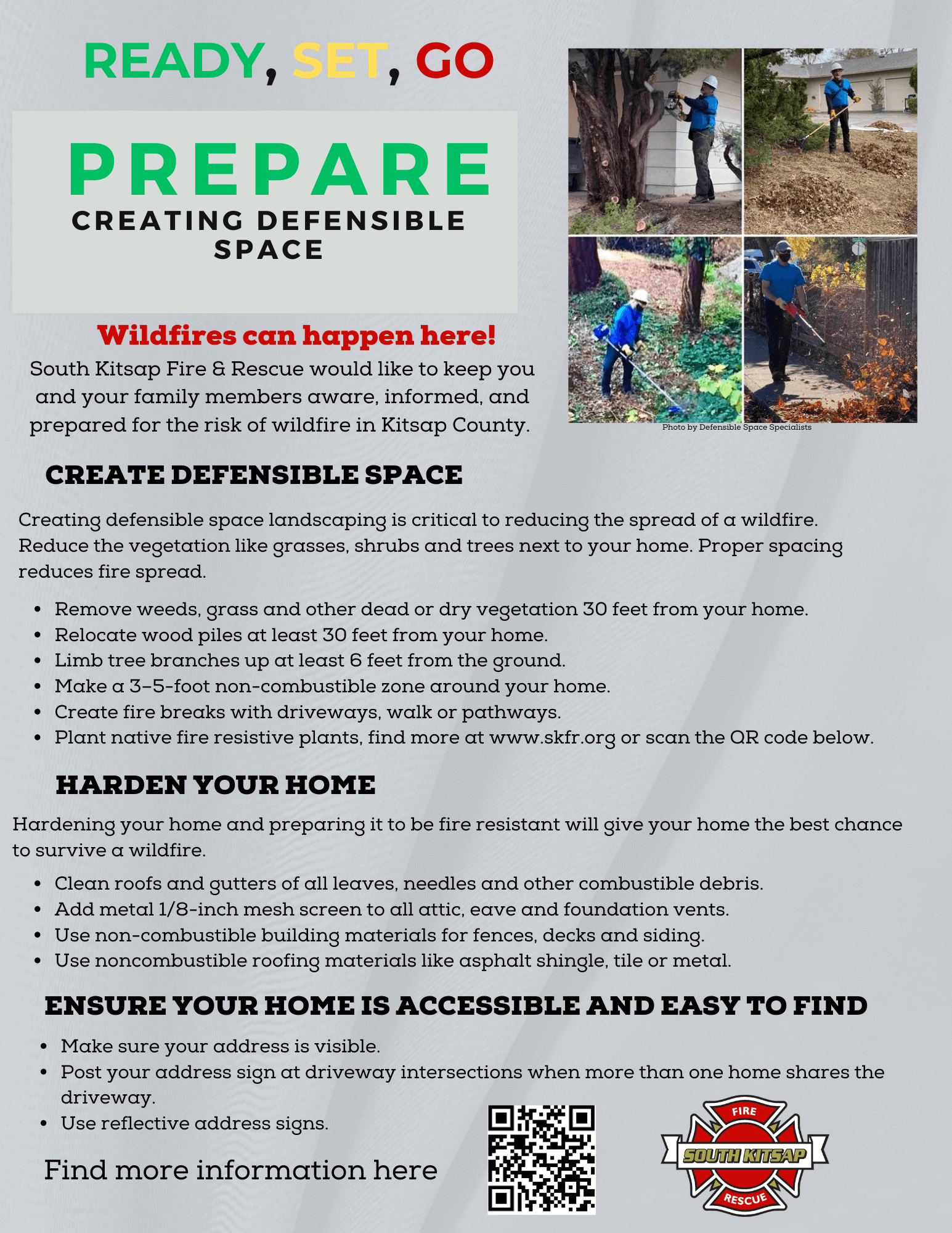
- Create defensible space around your home by clearing vegetation and flammable materials.
- Maintain a non‑combustible zone within 5 feet of your house, and reduce fuels out to at least 30 feet to slow wildfire spread.
- Choose fire‑resistant landscaping and materials wherever possible.
- Regularly clean gutters, roofs, and drains of leaves, needles, and debris.
- Store firewood and other combustibles away from your home and structures.
Access & Addressing
- Maintain clear driveway access for emergency vehicles, with turnarounds where possible.
- Make sure your address is visible from the road day and night (visit out At-Home Fire Safety page for more information on how to order a blue addressing sign).
- Trim trees and branches at least 10 feet above the ground to reduce ladder fuels.
Preparedness Planning
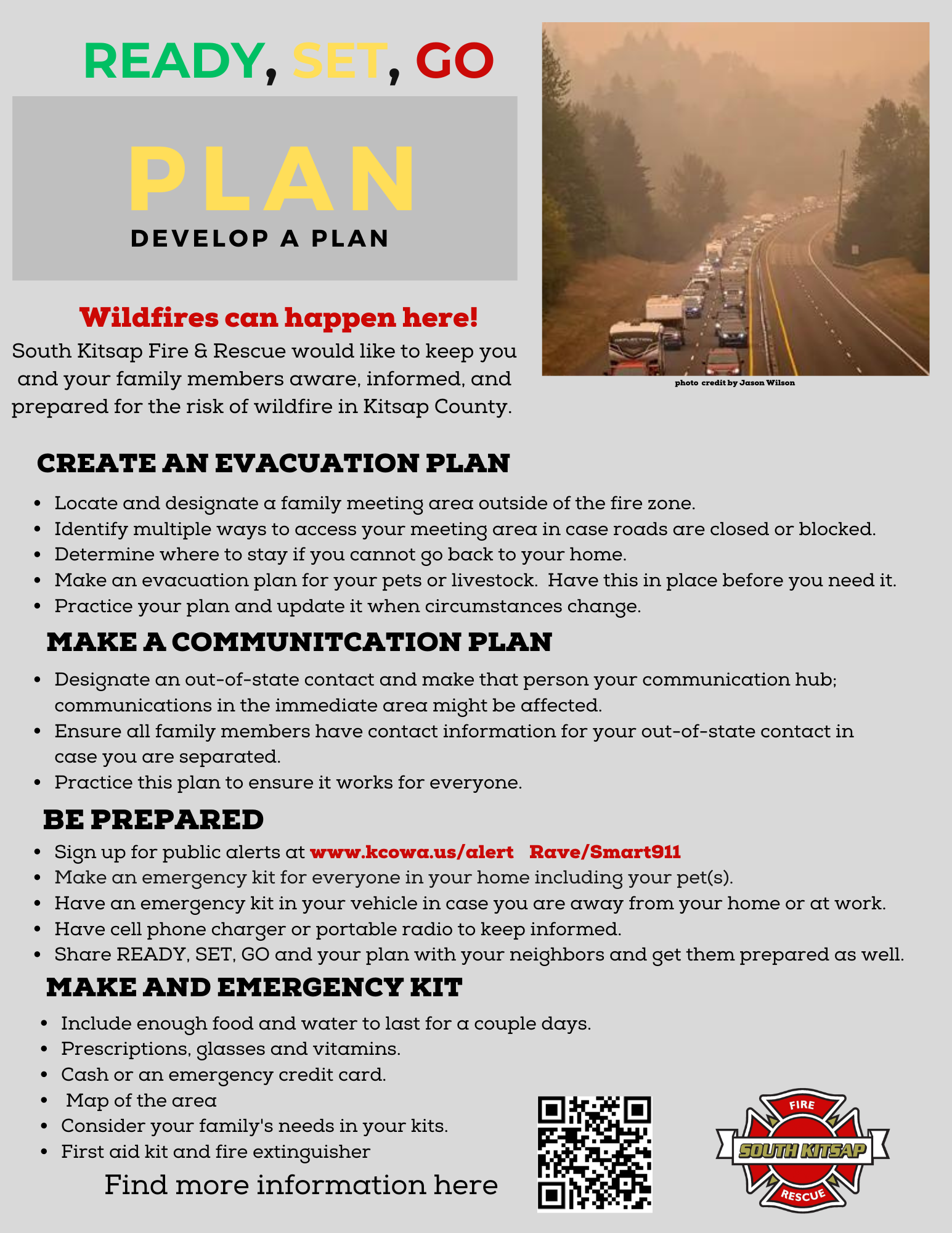
- Create a wildland fire action plan that includes evacuation routes, communication plans, and a designated meeting place.
- Prepare a “Go Bag” with important documents, medications, supplies, and emergency contacts.
- Sign up for local alerts and notifications so you receive warnings early.
Ready, Set, Go! – Wildland Fire Action Guidance
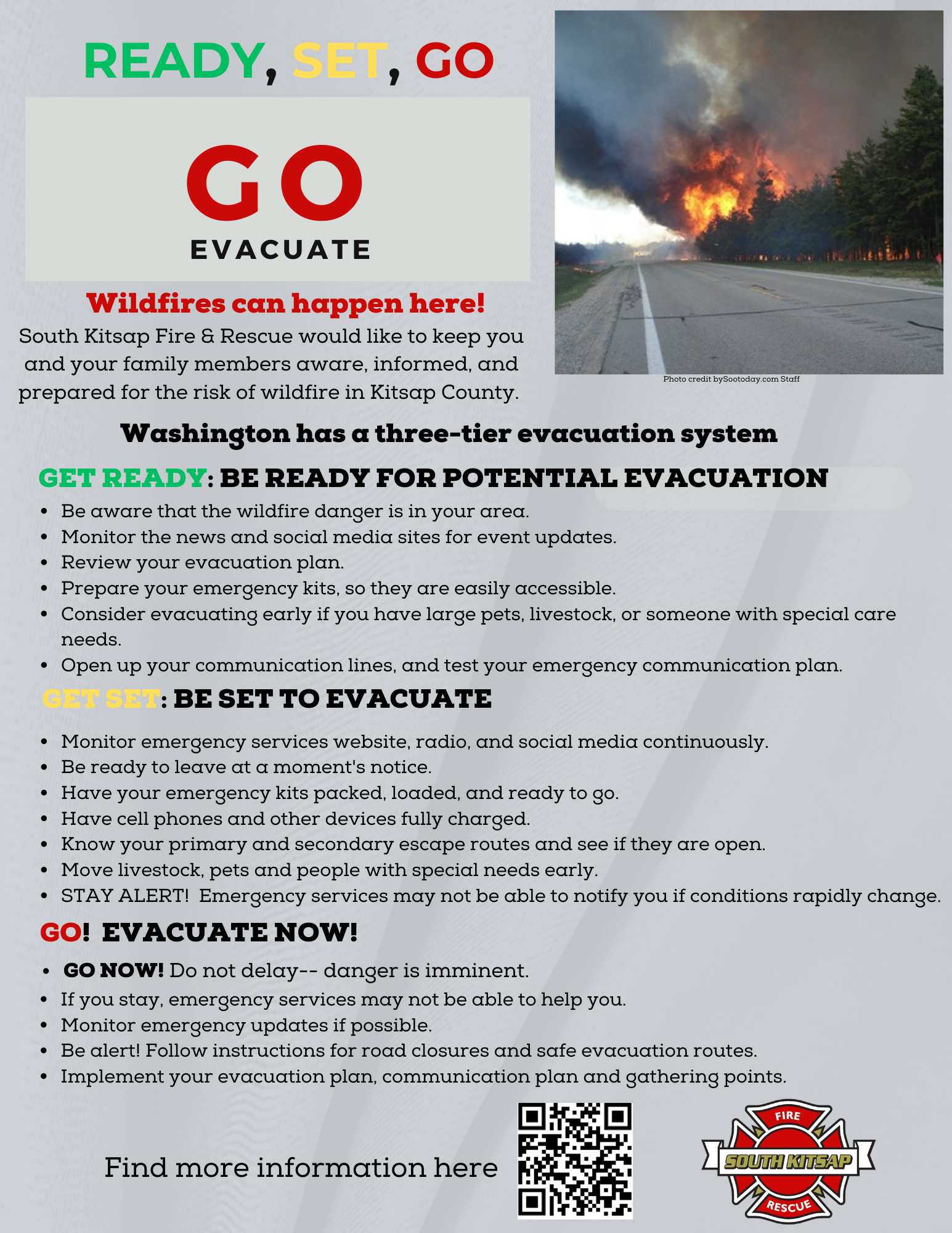
Kitsap County amongst other first responder partners are part of the “Ready, Set, Go!” campaign and program established by the Internation Fire Chiefs Association (IFCA). Ready, Set, Go! educates people on how to prepare for wildfires by encouraging them to get ready before a fire starts, stay away when fire danger increases, and act quickly when it’s time to evacuate:
Ready – Prepare Early
Be fire-wise and prepare long before fire season. Take personal responsibility for property mitigation and family preparedness.
Set – Situational Awareness
Stay aware of conditions around you. Monitor local fire updates and be set to act if needed.
Go – Act Early
When a wildfire threatens your area or an evacuation order is given, leave early. Don’t wait for conditions to worsen — early evacuation increases your safety and helps firefighters by reducing traffic and confusion.
Firewise USA®and Community Action
Consider getting involved with the National Fire Prevention Association’s (NFPA) Firewise USA® or similar programs that bring neighbors together to reduce wildfire risk and implement mitigation strategies for entire neighborhoods (Learn more on Firewise.org)
Resources & Tools
Flyers & Fact Sheets
- Ready, Set, Go Informational Flyers
- Wild Research Fact Sheet: Fencing: Material, Installation and Maintenance Choices Informational Flyer
- Wild Research Fact Sheet: Reducing the Vulnerability of Your Deck to Wildfire Informational Flyer
- Wild Research Fact Sheet: Immediate (noncombustible) Zone
- Wild Research Fact Sheet: Under-Eave Construction
- Wildfire Season Preparedness Checklist
Guides & Handbooks
- Firewise USA® Program Toolkit
- Property Fire Risk Assessment & Mitigation Handbook by the Society of Fire Protection Engineers (SFPE)
Videos
- Video: The Balance Between Wildfire Defensible Space and Home Ownership
- Video: Evacuation Tips from Washington State
Other Organizations & References